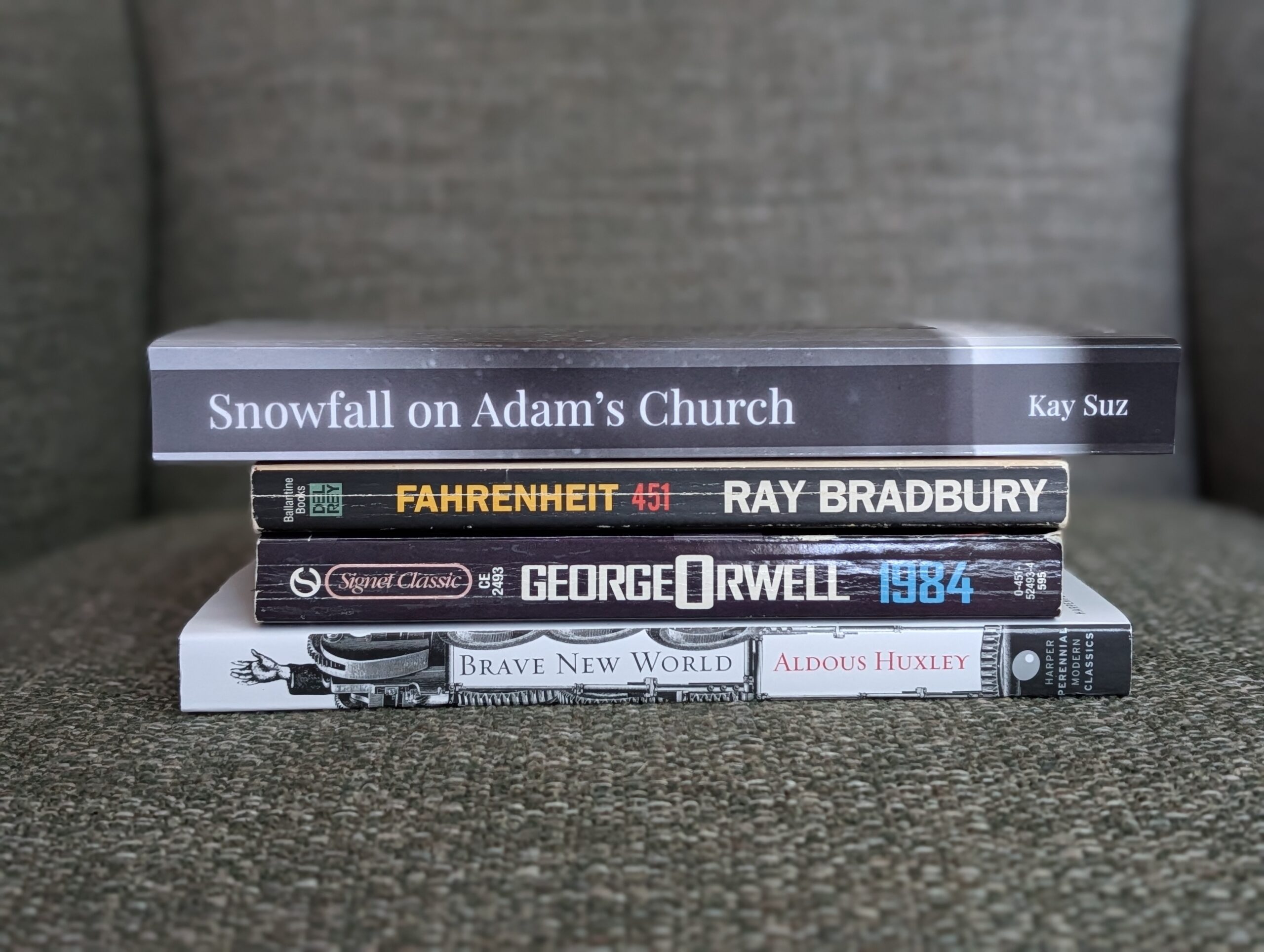
The latest edition of my book was supposed to have a preface. But I, uh, forgot to put it in the file. (Go ahead, you can laugh at me. I’ve laughed at myself about this on more than one occasion.) So here it is, for free. Maybe it will help you understand why I wrote my first book, and maybe it will inspire you to run out and buy it so you can read the whole thing on paper. I would love to know your thoughts, either way.
__________________________________________
Why do I write science fiction? I know it’s not the most popular of genres. But I can’t help myself. Science fiction prompts us to make sense of the world we live in, while looking forward to the world we hope will come. Some authors strive to paint a vivid and immersive picture of the past. Many write about things as they are in this moment. Others hope to foreshadow the prospects or dangers of the distant future. Me? I like to write about the future, just before it happens. I’m that person who cries, “Look out for that pothole!” just before your car strikes it and jolts your spine into next week. I tell people that this book is about the near future, but alas, we are already living within its pages.
Growing up, I started my journey as a reader in the fantasy genre, as most children do. I loved fairy tales, wardrobes, and inanimate objects that came to life and filled my mind with whimsy and fanciful adventures. But I didn’t always want the happily-ever-after ending, and children’s fantasy stories began to disappoint. I’m guessing that’s when I discovered my affinity for science fiction. It was darker in the same way that real life often was. A kind of foray into the wicked realities of human nature and the affliction it could lead us into.
I began making notes for “Snowfall on Adam’s Church” around the time that smart phones were gaining a foothold in my world. I still had a flip phone, which would only be traded for a slide phone because I wanted to be able to send a short text without taking 10 minutes to type it out one letter at a time. But everyone around me had upgraded to smart phones, and the repercussions were almost immediately evident. It all started with excitement for this new technology that was fun and useful and valuable in our everyday interactions with each other. Everyone told me it would change my life. I knew they were right, which was why I wanted to steer clear of this relatively new technology for as long as possible.
During that time of avoidance, I still let the elements of our brave new world marinate in my mind and notebooks. (Yes, physical notebooks with lined pages and a stack of pens that I loved.) Every time I observed people in public, some of those little details of everyone’s new e-life stuck with me. And then when I finally sat down to write this book, it was finished in only a couple of months. I scribbled down random chapters first thing in the morning and then transcribed them on my computer in the afternoon. It was a strange thing that my brain was doing – giving me those chapters out of order – but as I rearranged them into the story of Constantin and his struggle with technological addiction, the world around me began to come into focus. That kind of clarity is not always an easy thing to digest and inspires a deep comprehension of the value of ignorant bliss. But I do think it’s important to walk this world with our eyes open.
And so I write.
I have a lot of things to say, most of which could irreparably damage my relationships and my ability to function in society on a daily basis. Writing provides an opportunity to vent the things I am thinking without raging against whichever human is standing in front of me in any given moment. And science fiction can say everything I want to say about the world in a way that keeps me on this side of sanity. Or gives the appearance of it, at any rate. And if a character says something rude or ugly, well that’s their problem, not mine. Among the things my characters think, which I may or may not have said in real life:
Devices are evil.
People are evil.
Devices and people deserve each other, but that doesn’t make it right.
Okay, so that may not be the best way to win people over to my point of view. But the facts remain.
People have made gods of their devices.
People have used their devices to make gods of themselves.
Being a god is a lonely, lonely business.
The world is too big, or perhaps too small now, for everyone to say what they think without consequence. And putting it all out there on a daily basis leaves us dry and spent – boring little individuals in a world full of special.
Disconnecting from the natural world in exchange for a hit of dopamine in the form of little red notification flags is a short trip to hubris, isolation, creativity deficits, and a loss of reality. We need more connection, but not with the e-world. We need to connect with nature, ourselves, and each other if we are to endure and thrive in the future that stands before us now. Some of my characters dare to imagine a world that is not dominated by screens. But they live in a world of fiction. How realistic can it be?
This was not a hard book to write. But it may be a hard book to read. I can only hope that it sparks some amount of clarity in those who immerse themselves in its pages. If those who read this story open their eyes for one small moment, perhaps they will see the messenger who points toward the future like the Ghost of Christmases Yet to Come and says, “Be careful” or “Beware” or just waggles a bony finger and says, “Look.”
When people first read this book, they came to me with wide eyes and talk about how they saw themselves in its pages. They told me that they were haunted by this story because it made them take a good hard look at how they spent their time. They began to notice how often they picked up their devices and tumbled down the electronic rabbit hole. Who knows? Maybe it changed their lives. Or maybe they’re looking at their devices right now. My humble wish is that it will at least help them remember to look up more than down. And, dear reader, I hope the same for you.


